
3 Highly Recommended Chicago Women’s Therapists
Women often carry enormous pressure across relationships, caregiving roles, work, family dynamics, identity, and expectations about who they are supposed to be for others. These experiences can shape emotional well-being in deep and lasting ways, especially when trauma, burnout, anxiety, people-pleasing, or major life transitions are also present.
At Watch Hill Therapy, our Chicago women’s therapists provide trauma-informed care that is relational, grounded, and attuned to the complexity of women’s lived experiences. This work requires more than surface-level support. It requires understanding how personal history, cultural expectations, attachment, and chronic stress can affect the way someone moves through the world and relates to themselves.
Our therapists help women process painful experiences, better understand longstanding patterns, and build a more connected and sustainable relationship with themselves and others. Meet our team here, learn more about our approach, and reach out when you’re ready to begin.
Meet our Chicago therapists for women's issues
Jump to a therapist
Recommended for LGBTQIA+ women: Angie Zara
Recommended for survivors of domestic or sexual violence: Caitlin Lawler
Recommended for creative/art therapy approaches: Rachel Lara
If you’re not sure which therapist is right for you, we encourage you to reach out so we can speak directly and match you with a therapist.

Angie Zara, LPC
Recommended for LGBTQIA+ women
Angie creates a warm, affirming space where LGBTQIA+ women can explore their identities, heal from trauma, and navigate relationship challenges without judgment. Her strengths-based approach helps you tap into your resilience while honoring your unique journey and the systems that have shaped your experience.
Credentials: Licensed Professional Counselor
Location: 25 E Washington St, Chicago, IL 60602
Virtual therapy? Yes, in addition to in-person

Caitlin Lawler, LCPC
Recommended for survivors of domestic or sexual violence
Caitlin is an EMDR-trained therapist who specializes in helping women heal from childhood abuse, domestic violence, sexual violence, and relational trauma. She combines trauma-focused EMDR with attachment-based and somatic practices to help you rebuild self-trust, internal safety, and confidence at a pace that honors your nervous system.
Credentials: Licensed Clinical Professional Counselor EMDR trained
Location: 25 E Washington St, Chicago, IL 60602
Virtual therapy? Yes, in addition to in-person
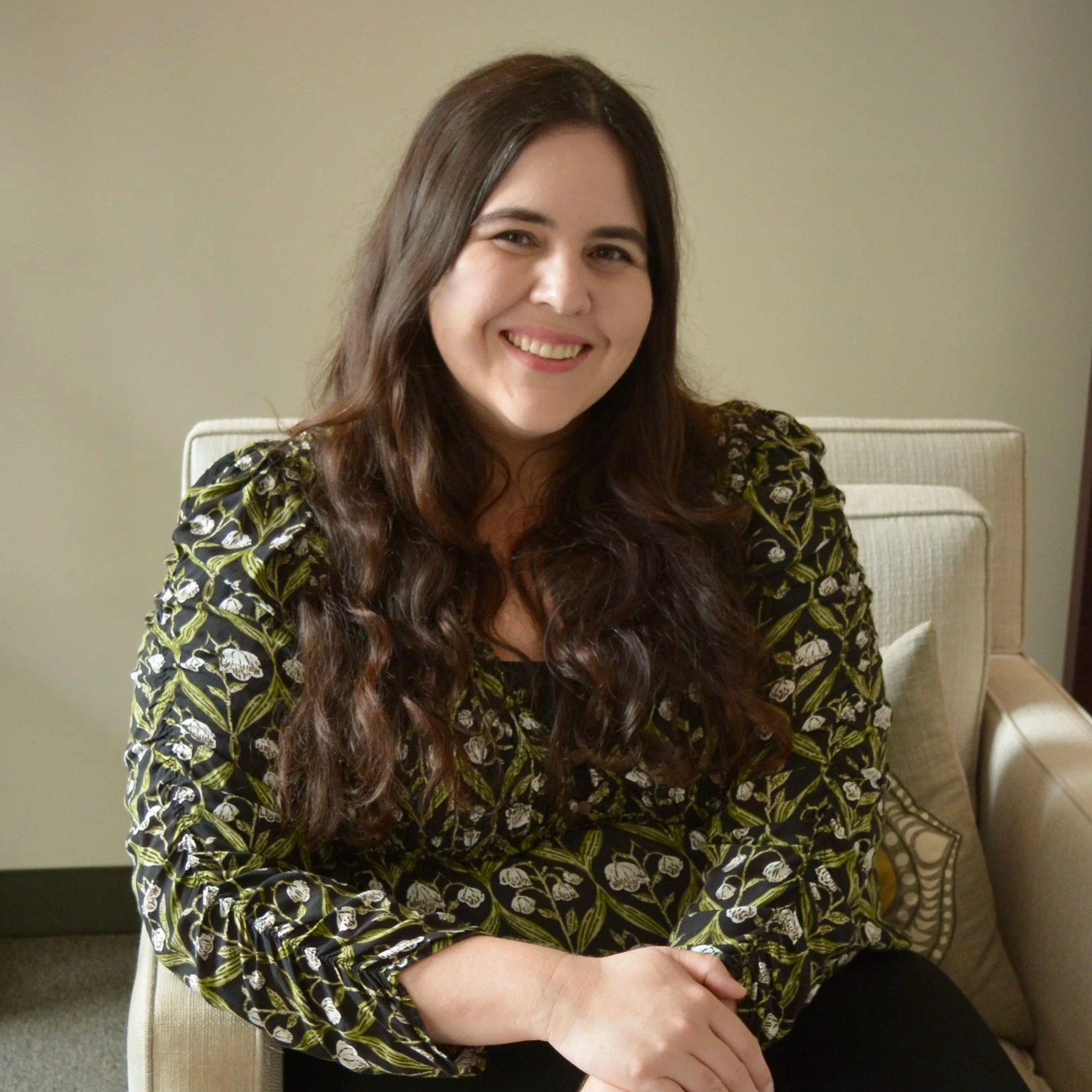
Rachel Lara, MA, ATR-P
Recommended for creative/art therapy approaches
Rachel is a trained art therapist who offers an alternative to traditional talk therapy for women processing trauma, PTSD, C-PTSD, and dissociation. Her multicultural, LGBTQ+-affirming practice integrates creative expression with stage-based trauma treatment, making space for healing that goes beyond words.
Credentials: ATR-P (Art Therapist-Provisional)
Location: 25 E Washington St, Chicago, IL 60602
Virtual therapy? Yes, in addition to in-person
What sets our practice apart from other Chicago women's therapy providers
We're not your average therapy practice—we're trauma specialists who understand that healing happens in relationship, not through cookie-cutter approaches. Our unique strengths include:
13 years of specialized trauma expertise beyond standard "trauma-informed" care.
Diverse, culturally sensitive team that understands intersectional identities and systemic oppression.
Hybrid care options with evening/weekend availability to fit your life.
Convenient downtown Chicago location in the heart of the city. Virtual sessions also available.
Beyond-the-couch approach integrating somatic work, relational therapy, and systems perspectives.
Therapist-first culture where our clinicians are supported, supervised, and continuously trained—which means all-around better care for you.
Areas we support women with
Surviving and healing from childhood sexual abuse, emotional abuse, physical abuse, or neglect
Processing sexual trauma, assault, or intimate partner violence
Managing anxiety, depression, PTSD, complex PTSD, or dissociative experiences
Healing attachment wounds, betrayal, and navigating intimacy challenges in relationships
Breaking cycles of people-pleasing, perfectionism, self-harm, or self-abandonment
Navigating identity development—sexual, gender, racial, cultural, or spiritual
Coping with systemic oppression, including racism, sexism, homophobia, transphobia, or religious trauma
Processing grief, loss, and life transitions that shake your foundation
Managing life with chronic illness, disability, neurodivergence, or body image struggles
Parenting through your own trauma, navigating infertility, pregnancy loss, or postpartum challenges
What to expect from the therapy process
-
Your first sessions are about building trust and safety. We'll take time to understand your story, your pain points, and what you're hoping to heal without rushing into fixing mode.
-
Healing isn't linear, and we won't push you faster than your body and mind are ready to go. We follow your lead while gently supporting you to expand your window of tolerance.
-
Drawing on relational therapy, somatic work, attachment theory, and trauma-specific modalities, we customize our approach to match your unique needs and goals rather than forcing you into a one-size-fits-all model.
-
Therapy with us isn’t just talking about your feelings—it’s transformative. We help you build practical skills, shift patterns that no longer serve you, and develop the internal resources to navigate life's challenges with greater ease and authenticity.
FAQs about counseling for women's issues
-
The term “women's issues” encompasses the unique psychological, relational, and systemic challenges women face: from navigating gender-based violence and discrimination to managing the intersection of multiple identities, processing reproductive health experiences, and healing from trauma shaped by patriarchy and oppression.
Really, any topic you’re grappling with as a woman is considered a “women’s issue,” so even if you don’t see yourself reflected here, we encourage you to reach out and explore how therapy can help you.
-
If you're feeling stuck, overwhelmed, disconnected from yourself, or struggling to cope with life's demands, therapy can help. Other common signs include persistent anxiety or sadness, relationship difficulties, past trauma impacting your present, or simply wanting support as you navigate major life transitions or personal growth.
If you’re not sure whether therapy can help, contact us so we can discuss your situation directly and offer our professional recommendation.
-
Absolutely. Trauma-specialized training means we understand nervous systems, attachment, and how the body holds emotions—skills that benefit everyone, not just trauma survivors. We work with clients navigating anxiety, relationship issues, life transitions, grief, identity exploration, and personal growth. Our depth of training simply means we offer more sophisticated, relationally attuned care for whatever brings you in.
Plus, many of our clients don’t initially recognize what they experienced as trauma, but realize through the course of therapy that they were deeply impacted by past events, no matter how “big” or how “small.”
-
Not necessarily—what matters most is finding a therapist who understands your experiences and creates genuine safety. That said, many women find working with female or gender-diverse therapists helpful when processing gender-specific trauma, navigating patriarchy, or exploring identity, as shared lived experience can deepen understanding.
We encourage people to schedule a few sessions with a therapist to meet, ask questions, and see if it feels like a good fit. This allows you to make sure that you feel comfortable with your therapist before committing to working together long-term.